Inside the page
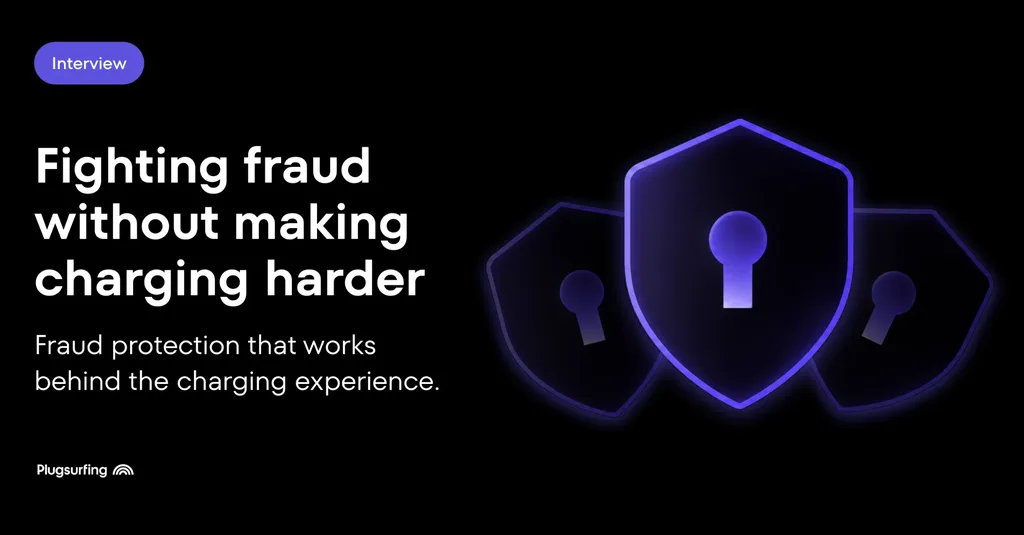
EV charging fraud can take many forms, from compromised accounts and cloned charging cards to payment fraud. Fighting it is not just about stopping suspicious activity. It is also about doing it without making charging harder for legitimate drivers.
EV charging fraud can take many forms, from compromised accounts and cloned charging cards to payment fraud.
As charging services scale, spotting that activity becomes another operational task that needs to be managed.
But fighting fraud is not just about stopping suspicious activity. It is also about doing it without making charging harder for legitimate drivers.
For Plugsurfing, fraud protection is part of what happens behind the roaming connection. Alongside access to the network, we help partners manage the operational work behind charging, including invoicing, billing, CPO disputes, and fraud management.
Fraud is more than a payment problem
Fraud can happen at different points in the charging journey. An account can be compromised. A charging card can be cloned. A payment method can be fraudulent. These issues can then show up in the way charging sessions are used, creating patterns that indicate something may be wrong.
If suspicious behavior is not identified and acted on automatically, misuse can continue across many charging sessions before someone spots the pattern manually. That can make fraud costly, slow, and resource-intensive to manage.
Our role is to identify those signals early, automatically alert partners when something looks wrong, and apply configured controls automatically where appropriate, rather than waiting for the issue to be discovered through manual review.
For many sessions, driver onboarding, KYC, and payment are managed outside the Plugsurfing platform. So our fraud controls focus on how the charging card is used, spotting unusual patterns and applying configured controls where needed.
There are three common areas of risk:
- Account takeover: Compromised accounts can give someone else access to a driver's charging credentials. We use single-use login links rather than traditional passwords, reducing one source of account-security risk.
- Charging card security: Cloned or compromised charging cards can create clear patterns of implausible or unusual usage. We help identify those patterns and apply rule-based controls under configured conditions.
- Payment fraud: Chargebacks, stolen credit cards, and similar issues remain part of the wider fraud picture, even where payment processors handle parts of the payment-risk process.
For partners, the impact goes beyond the cost of a fraudulent session. Fraud can undermine trust in the charging experience, both for drivers and for the businesses responsible for delivering it.
Security without adding friction everywhere
Drivers want their accounts protected. They also expect charging to work without unnecessary steps.
Partners have the same balancing act. They need controls that help manage fraud without adding extra verification to every charging session.
That is why our approach is designed to work in the background.
Rather than adding as many security checks as possible, the aim is to spot unusual and implausible behavior and apply controls when the available signals indicate a potential problem.
What we look for
Fraud does not follow a single pattern. It can emerge through changes in charging behavior that, viewed together, suggest a charging card may be at risk.
Our approach has two parts. First, preventative controls can limit exposure when configured thresholds are reached, including stopping further authorizations.
Second, we analyze historical charging data to identify patterns linked to fraudulent activity. This helps us assess whether a charging card may be misused and act before the issue develops further.
The aim is simple: focus controls where there are genuine signs of risk, while allowing legitimate drivers to charge without unnecessary friction.
Spotting potential fraud earlier
The earlier suspicious behavior is identified, the more opportunity there is to limit its impact.
Depending on the setup and the signals available, Plugsurfing can identify unusual behavior during authorization and across completed charging sessions, rather than relying only on issues that surface later through chargebacks, disputes, or support cases.
That matters for partners too. Running a charging service should not mean building specialist fraud processes around every integration.
By identifying unusual charging behavior and applying configured controls, Plugsurfing can help partners:
- Spot potential misuse earlier
- Limit suspicious sessions under configured conditions
- Reduce the number of issues that only surface later through support or dispute processes
- Apply consistent controls to charging-session risk
Fraud protection is part of running roaming
Access to a roaming network is important. But the work does not stop once the connection is live.
Every charging session creates operational processes behind the scenes. There is charging data to manage, invoices to reconcile, billing to handle, CPO disputes to resolve, and potential fraud to monitor.
This is part of what Plugsurfing takes care of for partners.
Fraud protection is one piece of that work. Our controls help identify suspicious charging behavior earlier, so partners do not have to rely only on problems being discovered after a session has already turned into a dispute or support case.
Different risks need different responses
Fraud changes over time. And not every partner has the same risk tolerance or the same capacity for manual review.
So fraud response cannot be one-size-fits-all.
Configurable controls allow different responses depending on the signals and conditions involved. The direction is toward more risk-based fraud management: focusing controls on activity that looks unusual while keeping normal charging as straightforward as possible.
Taking care of what happens behind the charge
For drivers, a charging session should be simple.
Behind that simple experience, however, a lot needs to work.
Fraud protection is one part of it. Billing, invoicing, reconciliation, and CPO dispute management are others.
Plugsurfing helps partners manage the operational complexity of roaming and e-mobility, so they can stay focused on their core business.
Our approach to fraud follows the same principle: spot potential problems early, apply the right controls where needed, and keep unnecessary friction away from legitimate drivers.