Inside the page
Roaming access sounds simple. One connection, one network, charge anywhere. The clean version of that story fits in a sentence. The work behind it doesn’t.
Talk to us about managed roaming
What roaming operations actually looks like
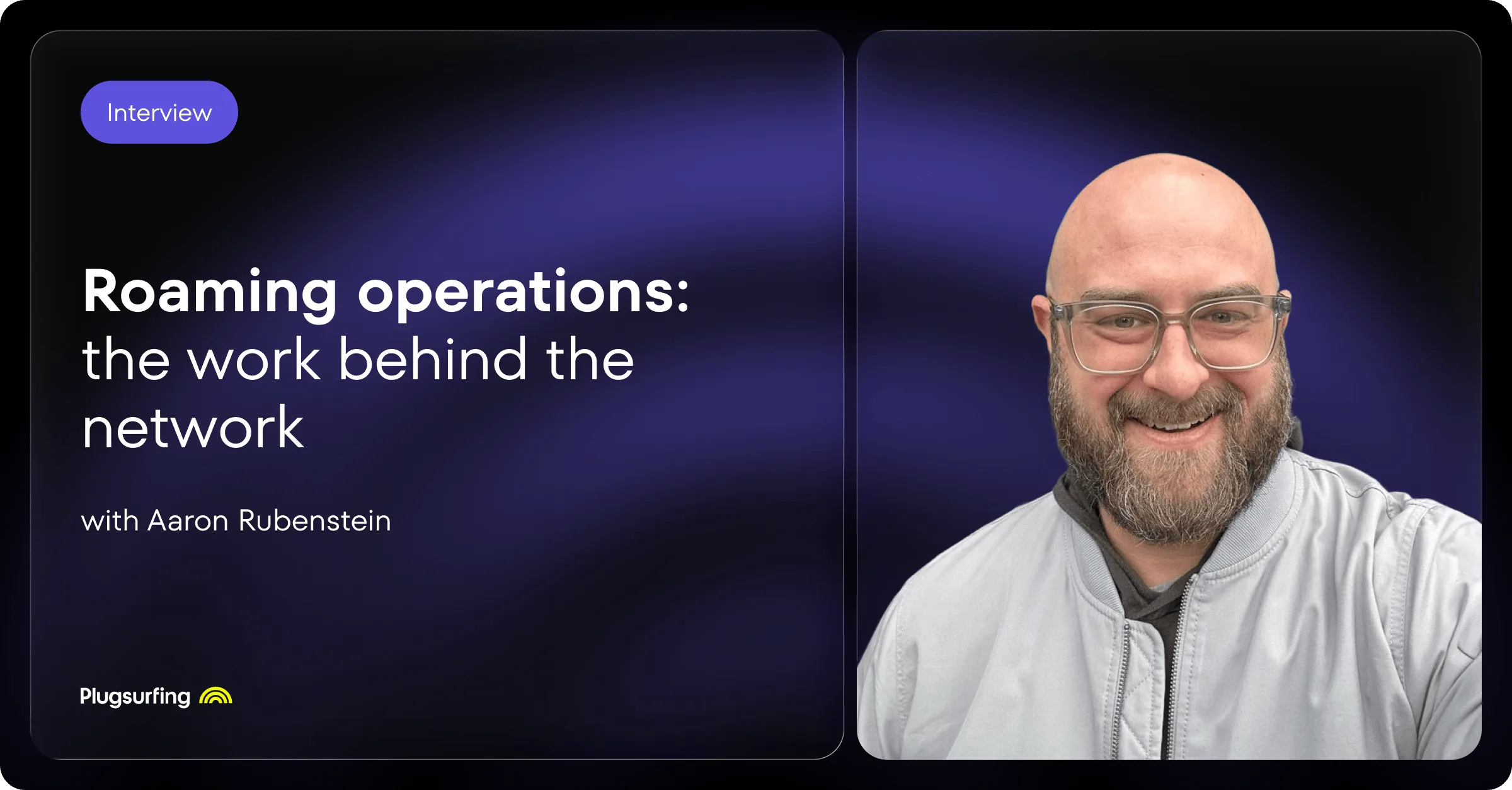
We sat down with Aaron Rubenstein, who leads our roaming operations team, to find out what his team does all day and why it matters for partners and drivers.
Aaron’s summary of the job:
“Make sure the network works and that nobody’s moving money the wrong way.”
That sounds straightforward. Then you consider the scale. Over 900 charge point operators across 26 countries. Hundreds of invoices every month. Thousands of charging sessions per day from a single CPO. Every one of those sessions needs to be recorded, priced correctly, reconciled, and paid.
The gap between “one connection” and “it actually works” is where Aaron’s team lives.
Knowing what normal looks like
The team monitors CDR volumes, pricing data, and session patterns across hundreds of CPOs every day. The real skill isn’t reading dashboards. It’s recognizing when a pattern breaks.
A CPO that normally sends 5,000 charge detail records a day suddenly sends 1,000. That’s a problem. Maybe the CPO’s backend is down. Maybe they changed something and records are being rejected on our side. Either way, the team catches it and starts working with the CPO to fix it before drivers or partners notice.
That kind of judgment comes from experience. Team members who have worked with the same CPOs for years know what “normal” looks like for each one. It’s hard-earned knowledge, and it’s one of the team’s biggest assets.
Triage: where attention goes first
Triage is a term borrowed from emergency medicine, and it applies here for a reason. Across hundreds of CPOs and thousands of sessions a day, the team works through a prioritized process that makes sure every case is handled in the right order and at the right depth.
Here’s what that looks like. Every invoice arrives with a PDF (the bill) and a CSV file (the itemized session list). The team cross-checks three numbers: the invoice total, the sum of the session file, and what Plugsurfing’s own records say those sessions should have cost.
Most invoices reconcile cleanly. When numbers diverge meaningfully, the team runs a full investigation: session-by-session comparison, outreach to the CPO, and a resolution process that ends in an agreed correction. Smaller variations are logged, tracked, and reviewed as part of the same process.
The point of triage isn’t what gets set aside. It’s that nothing slips through without a decision about how to handle it. That’s what lets the team work at this scale without losing track of what matters.
A network, not a monolith
A network of 900+ CPOs is not a uniform group. It includes large operators running standardized systems, regional players with their own setups, and small local operators serving specific communities. Each is in the network because drivers need charging where those operators have infrastructure.
The team works with each CPO on terms that fit their operation. For larger operators, that has meant aligning invoice formats and data structures so reconciliation runs cleanly month after month. Smaller operators often prioritise infrastructure investment over back-office automation which the team accounts for in how it approaches reconciliation for each one.
Real coverage is the sum of all of that. It’s what keeps the network useful across the variety of places drivers actually go.
Everything in one place
Invoices, session data, disputes, and resolutions all live in one system: the Plugsurfing Power Platform. When something needs attention, it’s visible, routed through the right process, and tracked to resolution. Every open case has a clear status, owner, and resolution path.
That single operational view is what makes roaming work at this scale. The team can see issues across the full network, prioritize them consistently, and resolve them without losing context.
The direction isn’t to replace the team’s judgment. It’s to codify it into the tooling, so the operational standard stays consistent as the team evolves and the network grows.
What this means for partners
Whether you connect through Roam OCPI, integrate via Drive API, or have a white-label app powered by Plugsurfing, this is the operations layer behind your roaming traffic.
Pricing accuracy. Invoice reconciliation. Dispute resolution. Data quality monitoring. One point of contact, backed by a team that knows what to watch for across the full network.
The promise of managed roaming is simple access. The work that keeps that promise is not simple at all. That’s the point.
Want to talk about how managed roaming works for your setup?